
Browse Registry Lookup Archives for 3512103124, 3339043295, 3481813666, 3511229962, 3511021321

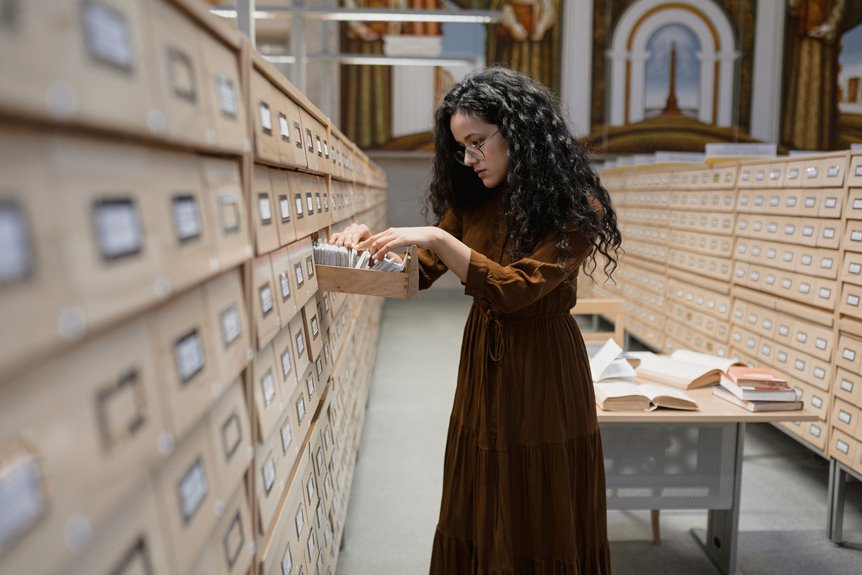
The Browse Registry Lookup Archives for IDs 3512103124, 3339043295, 3481813666, 3511229962, and 3511021321 present timestamped queries and interpretations that illustrate provenance gaps and careful annotations. They reveal how ownership and access histories are logged, challenged, and cross-referenced. Patterns emerge in metadata standards and accountability practices, inviting methodical mapping across datasets. The implications for reproducibility and governance are tangible, yet gaps persist, prompting further scrutiny and systematic scrutiny of provenance workflows.
What Browse Registry Lookup Archives Reveal About These IDs
Browse Registry Lookup Archives provide a precise, timestamped record of how each ID—3512103124, 3339043295, 3481813666, 3511229962, and 3511021321—has been queried and interpreted over time. The archives reveal traceability gaps and evolving data lineage, detailing methodological steps, intermediate annotations, and cross-references. The documentation remains meticulous, preserving clarity for readers who pursue freedom through disciplined, verifiable recordkeeping.
Tracing Ownership and Access History Across Datasets
Tracing ownership and access history across datasets requires a disciplined approach to provenance, documenting who accessed or modified data, when actions occurred, and under what permissions.
The investigation emphasizes traceability gaps and access provenance, detailing audit trails, preservation of evidence, and consistent metadata standards.
This archival practice supports accountability, reproducibility, and responsible data stewardship within open, freedom-oriented research ecosystems.
Patterns, Connections, and How to Map Them Visually
Patterns, connections among datasets emerge through the systematic mapping of interactions, attributes, and lineage discovered in the archival record.
The discussion outlines how patterns mapping and connections visualization reveal relational structures, enabling objective interpretation without bias.
A disciplined approach traces provenance, cross-references metadata, and aligns temporal sequences, producing clear, transferrable visual maps; audiences access freedom through informed, well-supported understandings of archival networks.
Practical Tips for Researchers Working With Registry Archives
Researchers approaching registry archives benefit from a disciplined, stepwise approach that emphasizes provenance, metadata integrity, and clear documentation of inquiry.
Practitioners should verify data provenance, assess source lineage, and record decisions about inclusion or exclusion. Maintain rigorous privacy implications awareness, implement access controls, and document ethical considerations.
Systematic note-taking, reproducible workflows, and versioned records support disciplined inquiry and freedom within archival constraints.
Conclusion
The Browse Registry Lookup Archives for these five IDs reveal disciplined provenance: every access, modification, and interpretation is logged to enable audit trails and reproducibility. Ownership and access histories emerge through cross-referenced timestamps and permissions, forming a cohesive map of data stewardship. Patterns link related records, suggesting relational edges ready for visual mapping. Researchers should adopt consistent metadata standards and rigorous documentation to sustain open, accountable ecosystems. Do such archival practices not embody the core responsibility of data custodians?