
Endbugflow can streamline routing, tracking, and collaboration in a music-making workflow. It emphasizes faster iteration, clearer signal paths, and centralized decision points, aligning with studios that value measurable outcomes. Its fit depends on genre, templates, and team conventions, along with cost and learning curve. The question remains: does the tool integrate with existing pipelines without creating silos? The answer depends on how these factors align with current studio practices.
What Endbugflow Brings to Your Studio
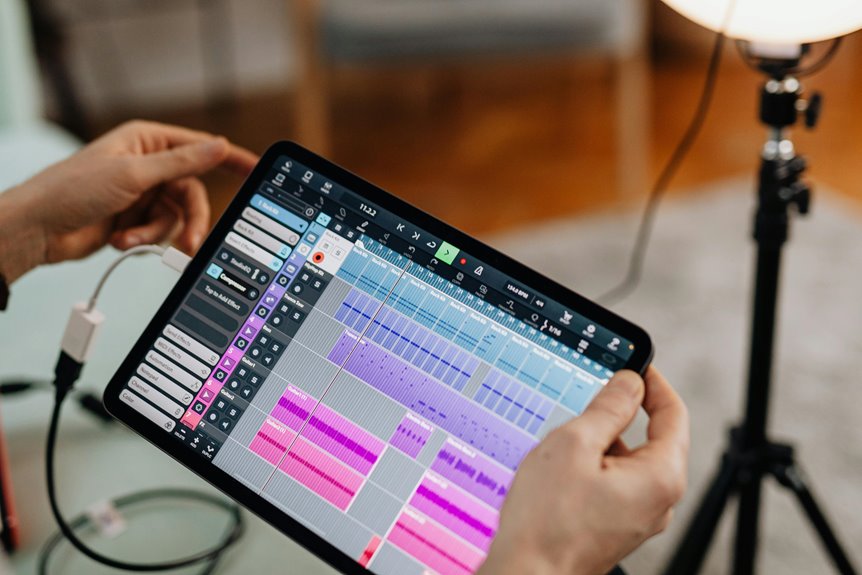
Endbugflow introduces a streamlined workflow that integrates directly with a producer’s existing DAW and hardware setup, enabling faster project iteration and clearer signal paths.
The Endbugflow setup enhances session clarity by centralized control, real-time routing, and reproducible templates.
Studio integration minimizes friction between workspaces, empowering collaborative decision-making and measurable results without sacrificing creative freedom or technical rigor.
Is Endbugflow Right for Your Genre and Workflow?
For teams operating across diverse genres and production pipelines, evaluating Endbugflow’s compatibility with specific workflows is necessary to ensure measurable gains.
The analysis centers on genre fit and workflow alignment, mapping tool features to distinctive processes.
Results indicate adaptable routing, modular templates, and transparent collaboration; compatibility hinges on project structure and team conventions.
When aligned, velocity increases, artifacts reduce, and creative freedom remains intact.
How to Decide: Costs, Learning Curve, and Compatibility
When evaluating Endbugflow, teams should balance total cost of ownership, the learning curve for new users, and compatibility with existing pipelines to forecast tangible benefits.
The assessment centers on idea generation and value assessment, guiding a collaborative decision.
Technical evaluation translates into measurable ROI, interoperability confidence, and streamlined workflows, enabling freedom-focused groups to pursue scalable outcomes without unnecessary complexity or vendor lock-in.
Practical Pitfalls and Best Practices With Endbugflow
Teams evaluating Endbugflow should anticipate practical challenges that surface during real-world use and implement concrete guardrails to maintain momentum. The analysis emphasizes disciplined workflow adoption, versioning, and clear ownership to avoid scope creep. Potential pitfalls include misaligned automation, data silos, and overreliance on templates. Idea one, idea two, paired with measurable success criteria, guide continuous improvement and collaborative risk mitigation.
Conclusion
Endbugflow offers organized, auditable workflows that boost breadth of collaboration and build dependable, data-driven results. By blending centralized routing with clear signal paths, studios can shorten cycles, standardize templates, and scale processes without sacrificing creativity. Teams benefit from transparent decision trails, repeatable setups, and measurable progress across genres and pipelines. While onboarding demands comfort with workflow rigor, the payoff is faster iteration and fewer friction points, fostering disciplined experimentation and productive partnerships. A technical, results-driven, collaborative boost for music-making.